
- Agentic means able to act on its own toward a goal. Agentic AI plans steps, uses tools and adapts, instead of only answering a single prompt.
- Agentic automation and agentic process automation combine AI agents with normal workflows, so software can handle tasks that need judgement as well as rules.
- The safest way to use agentic AI in a business is narrow goals, approved tools, clear limits and a person who signs off anything important.
Agentic is one of the most searched words in AI right now, and it is used loosely. This guide gives a plain definition of agentic, explains what makes AI agentic, and shows how agentic automation is used in real businesses today.
Agentic definition
Agentic describes something that has agency: the ability to decide and act on its own to reach a goal. A person who takes initiative is agentic. In software, an agentic system is one that does not just respond to an instruction, but works out what to do next, takes action and checks the result.
So when people say agentic AI, they mean AI that can pursue a goal over several steps. Ask a normal chatbot to book a meeting and it tells you how. Ask an agentic assistant and it checks your calendar, finds a free slot, sends the invite and confirms.
What makes AI agentic?
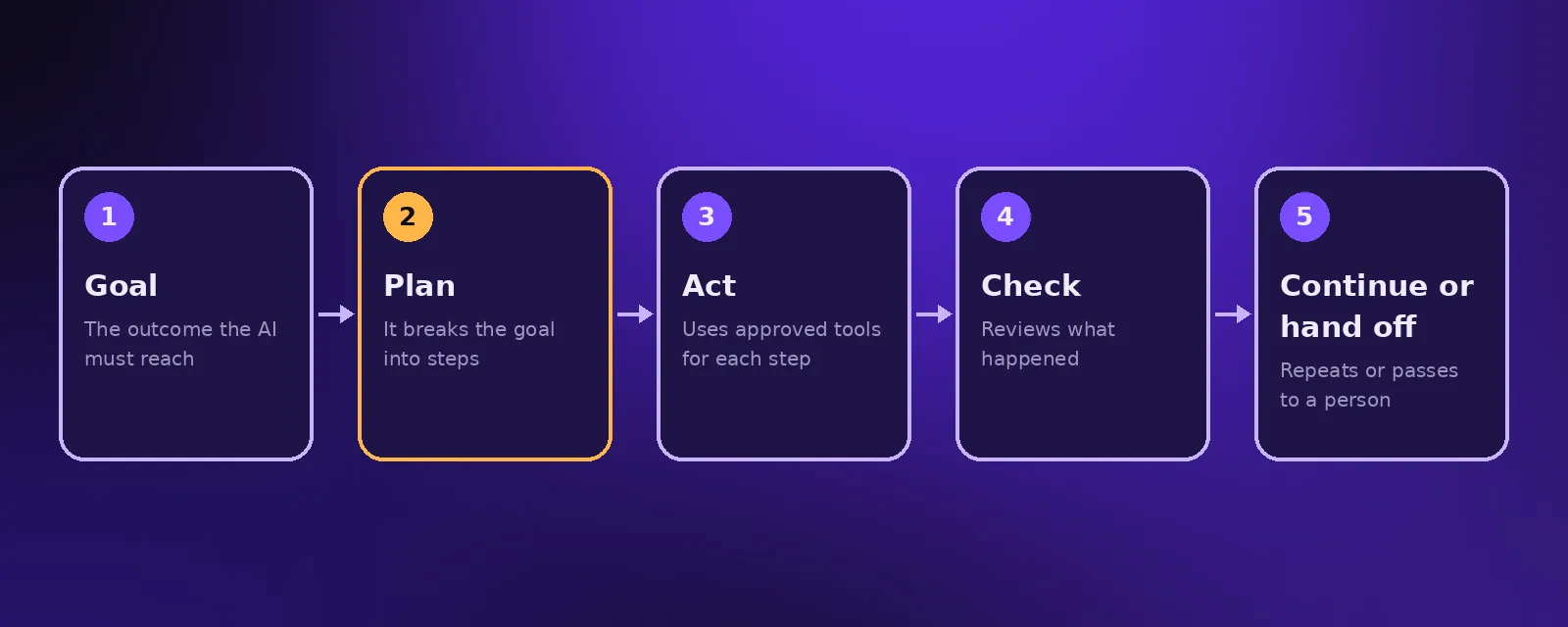
Four abilities separate an agentic system from a simple chatbot or a fixed automation:
- Goals, not just prompts. It is given an outcome to reach, such as "qualify this lead and book a call".
- Planning. It breaks the goal into steps and decides the order.
- Tool use. It can take actions in other systems: search a knowledge base, update a CRM, send an email or place a call.
- Feedback. It looks at what happened after each step and changes course if something did not work.
Memory is often added too, so the agent remembers earlier parts of a conversation or past interactions with the same customer.
Agentic AI vs generative AI
Generative AI creates content: text, images, code or audio. Agentic AI uses that ability as one part of a bigger loop that also includes decisions and actions. Almost every agentic system today is built on a generative model, but not every generative tool is agentic. Writing an email draft is generative. Writing it, sending it to the right person at the right time and logging the reply in your CRM is agentic.
What is agentic automation?
Agentic automation, sometimes called agentic process automation, combines AI agents with traditional workflow automation. Traditional automation follows fixed rules: when a form is submitted, add a row to a sheet. It is reliable, but it breaks when the input is messy or the next step needs judgement.
Agentic automation adds an AI agent at the points where judgement is needed. The agent reads the messy email, works out what the customer wants, picks the right path and hands a clean result back to the rule based workflow. You get the reliability of rules with the flexibility of AI. We cover the building blocks in our guide to agentic workflows.
Examples of agentic AI in business
- AI receptionist. Answers a call, understands the request, checks availability, books the appointment and sends a confirmation. See AI voice agents.
- Lead follow up. A new enquiry arrives, the agent researches the company, sends a personal reply, answers questions and books a meeting.
- Support triage. Reads each ticket, solves common issues on its own and routes the rest to the right person with a summary.
- Document processing. Reads invoices or applications, extracts the data, checks it against rules and flags anything unusual.
- Reporting. Pulls numbers from several systems each week, spots changes and writes a short summary for the team.
Risks and how to manage them
Because agentic systems act, mistakes have consequences. Good design keeps them safe:
- Narrow scope. One clear job per agent works far better than one agent that does everything.
- Approved tools only. The agent can only use the actions you allow, with the access it needs and nothing more.
- Human approval. Refunds, contracts and anything costly wait for a person to approve.
- Logging. Every decision and action is recorded so it can be reviewed and improved.
Frameworks such as the NIST AI Risk Management Framework are a useful reference for larger teams deciding how much autonomy to give their systems.
How to start with agentic AI
Pick one process that is frequent, predictable and costly today, such as answering enquiries or following up leads. Define what a good outcome looks like, list the tools the agent needs, and decide where a person must stay in the loop. Acceltor builds AI chat agents, voice agents and agentic workflows this way, with a fixed quote after a free audit.
Frequently asked questions
What does agentic mean?
Agentic means having agency: the ability to act independently toward a goal. In AI it describes systems that plan steps, use tools and adapt based on results, rather than only responding to a single prompt.
What is agentic AI in simple terms?
Agentic AI is AI that can get things done for you. Instead of telling you how to book a meeting, it checks the calendar, books the meeting and confirms it.
What is the difference between agentic automation and RPA?
RPA follows fixed, recorded steps and breaks when inputs change. Agentic automation uses AI agents to handle messy inputs and decisions, often working alongside RPA or workflow tools that carry out the fixed steps.
Is agentic AI safe for businesses?
It can be, when each agent has a narrow job, only approved tools, clear limits, logging and human approval for important actions.

Founder and CEO of Acceltor. Talha leads a team of engineers and designers building AI agents, automations, websites and apps for growing businesses.
Meet the team →