- Agentic means able to act independently toward a goal. An agentic workflow uses AI agents that plan, take actions, check results and adjust, instead of following one fixed path.
- Traditional automation follows rules you write in advance. Agentic automation handles messy inputs and decides the next step itself, within limits you set.
- The most reliable designs mix both: fixed workflows for predictable steps, AI agents only where judgement is needed, and a human in the loop for important decisions.
Agentic workflows are one of the biggest shifts in business automation. Instead of a script that breaks the moment something unexpected happens, an agentic workflow can read a request, work out what needs doing, use the right tools and check its own work. Here is what the term means, how it differs from traditional automation and where it makes sense to use it.
What does agentic mean?
In AI, agentic describes a system that acts with a degree of independence toward a goal. An agentic system does not just respond to a single prompt. It can break a goal into steps, choose which tool to use for each step, look at the result and decide what to do next.
What is an agentic workflow?
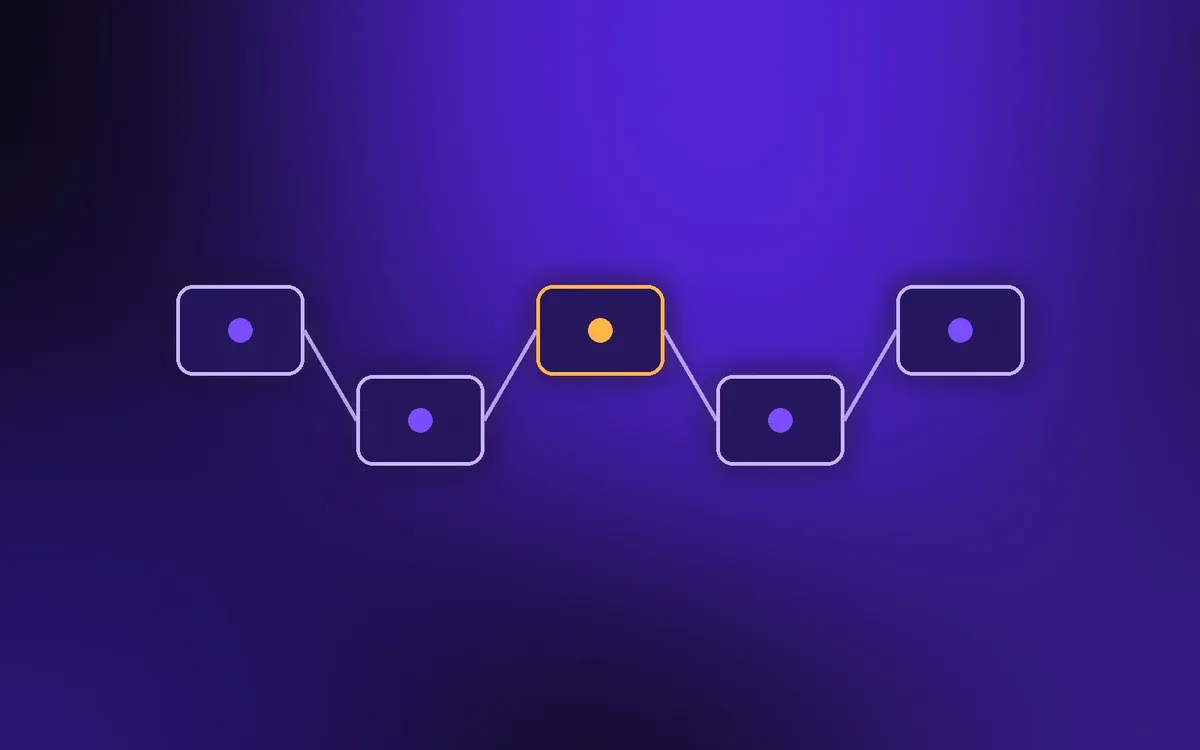
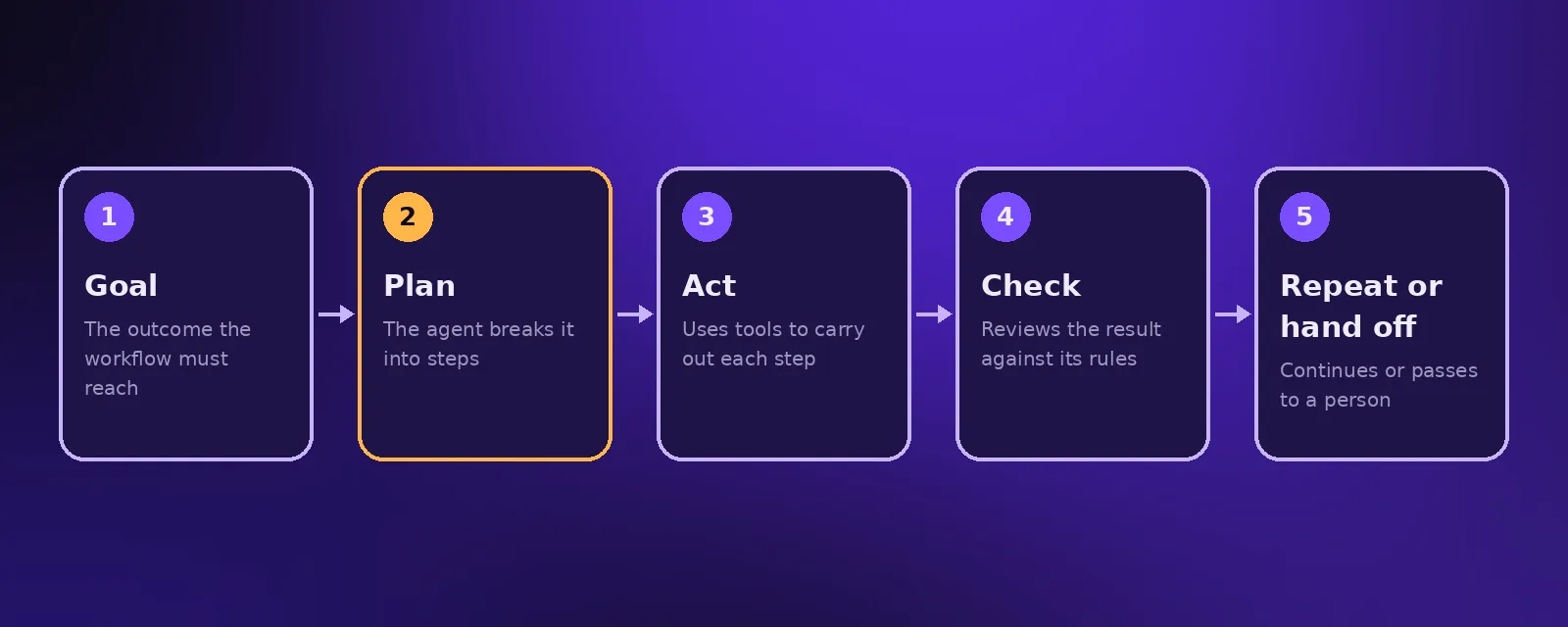
An agentic workflow is a business process where one or more AI agents carry out some of the steps. A typical loop looks like this:
- Goal. The workflow receives a goal, such as resolve this customer request.
- Plan. The agent works out the steps needed.
- Act. It uses tools: searching a knowledge base, checking an order, updating a CRM, drafting a reply.
- Check. It reviews the result against the goal and its rules.
- Repeat or hand off. It continues until the goal is met, or passes the case to a person.
Agentic automation vs traditional automation
| Traditional automation | Agentic automation | |
|---|---|---|
| How it decides | Fixed rules written in advance | AI reasoning within set limits |
| Inputs it handles | Structured, predictable data | Messy text, calls, emails and documents |
| When something unexpected happens | Stops or fails | Adapts, or hands off to a person |
| Best for | Moving data between systems | Tasks that need judgement |
What is agentic process automation?
Agentic process automation applies AI agents to end to end business processes, such as handling a support ticket from first message to resolution, or taking a lead from enquiry to booked call. It builds on traditional process automation by adding agents for the steps that previously needed a person to read, interpret or decide.
Examples of agentic workflows in business
- Customer support. An agent reads a message, identifies the issue, looks up the order, answers or processes a return within policy, and escalates anything unusual.
- Lead handling. An agent replies to a new lead, asks qualifying questions, scores the lead, books a call and updates the CRM.
- Back office. An agent reads incoming invoices, matches them to orders, flags mismatches and prepares entries for approval.
- Research and reporting. An agent gathers data from several systems and writes a weekly summary with the items that need attention.
How to design agentic workflows that are reliable
- Use agents only where judgement is needed. Keep predictable steps as fixed workflows in tools like n8n or Make. See workflow automation.
- Limit the tools. Give each agent only the actions it needs.
- Keep a human in the loop. Require approval for refunds, large changes or anything sensitive.
- Log everything. Every decision and action should be recorded so you can review and improve it.
- Start small. Prove one workflow end to end before adding more agents.
Getting started
The fastest route is to pick one process that is frequent and costly today, map it, and decide which steps truly need an agent. Acceltor builds AI agents for business and the workflows around them, with a free audit to find the best starting point.
Frequently asked questions
What is the definition of agentic?
Agentic describes an AI system that can act with some independence toward a goal, planning steps, using tools and adjusting based on results rather than only answering a single prompt.
What is an AI agentic workflow?
An AI agentic workflow is a business process in which AI agents plan and carry out steps, use tools, check their work and hand off to people when needed.
Is agentic automation safe for customer facing work?
Yes, when it is built with approved knowledge, clear limits, logging and a human handoff for anything outside those limits.
Do agentic workflows replace tools like n8n and Make?
No. They work best together: n8n or Make run the predictable steps and connect your systems, while AI agents handle the steps that need judgement.

Founder and CEO of Acceltor. Talha leads a team of engineers and designers building AI agents, automations, websites and apps for growing businesses.
Meet the team →